growth & Development
Growth begins where we are willing to adopt new perspectives, question familiar patterns, and understand development as an ongoing process.
A lived growth mindset creates exactly this space. It strengthens the belief that skills, leadership quality, and collaboration are not fixed, but can be continuously developed through reflection, experience, feedback, and targeted impulses.
My Offer:
I support experienced and emerging leaders, teams, and organizations in consciously identifying and actively shaping their development areas. Every individual, team, and organization brings its own context, goals, and learning needs. Often, it takes a fresh external perspective, a clear impulse, or a tailored training format to initiate growth effectively and anchor it sustainably.
My approach is to make potential visible, strengthen leadership capabilities, and rethink collaboration. This may include meaningful personality and team profiles, coach training for leaders, and individually tailored training concepts with a focus on leadership, communication, change, and agile collaboration.
From September 2026, my offering will also be expanded for professional coaches in providing eligible mentor coaching, including the preparation for ICF coach certification as ACC or PCC.

Personality Profiles
Describe some quality or feature of the company. Write a short paragraph about it and choose an appropriate icon.

Coaching Skills for Leaders
Describe some quality or feature of the company. Write a short paragraph about it and choose an appropriate icon.

Individual Trainings
Describe some quality or feature of the company. Write a short paragraph about it and choose an appropriate icon.
ICF Mentor-Coaching
starting Sept. 2026Personality profiles
For Individuals or Teams
Why are personality profiles helpful — and when does it make sense to use them?
Personality profiles provide a differentiated and analytical view of our personality, individual strengths, preferences, and behavioral patterns. They are not about judging people or placing them into fixed categories. Instead, they help make visible how our personality creates impact: how our traits and strengths show up in everyday work, how we are perceived by others, and which development areas may emerge from this.
The insights gained can provide valuable impulses for communication, working style, collaboration, leadership, self-leadership, and negotiation situations. They help us reflect more consciously on our own behavior, better understand characteristics, and learn from one another in a targeted way.
Personality assessments can also be highly valuable for teams. They show which traits, strengths, and dynamics shape a team, how these influence the way people work together, and how collaboration, trust, and effectiveness can be developed more intentionally.
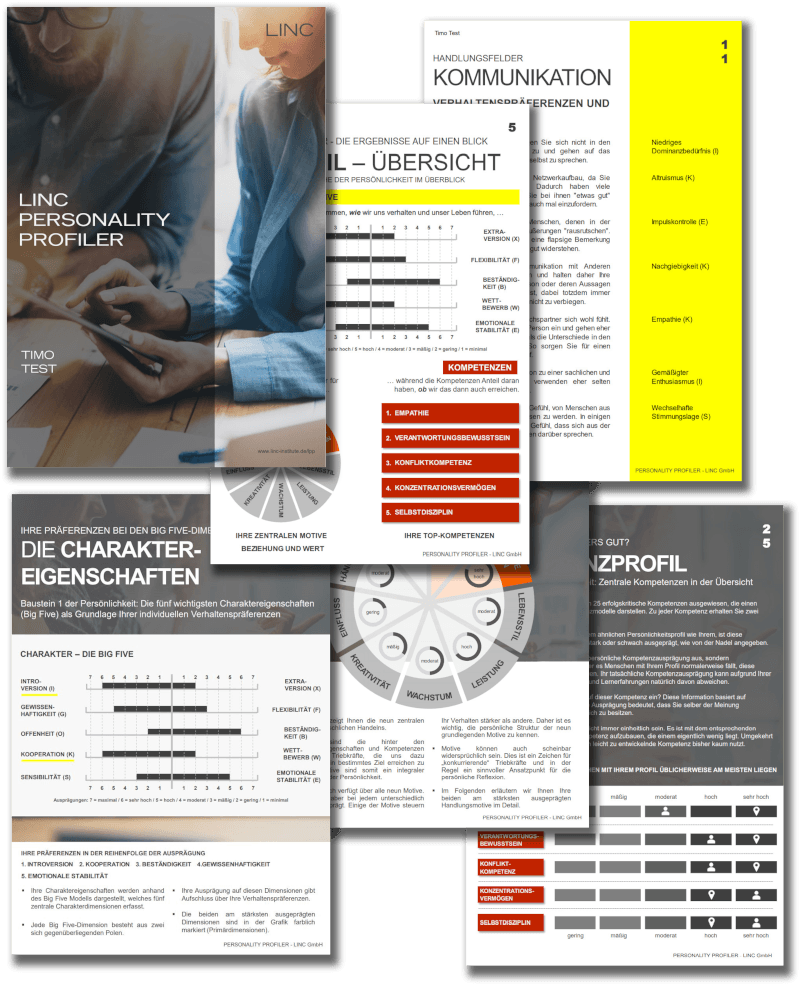
Upon request, I am offering tailored concepts - individually or as a team - aligned with your specific needs.
As a certified practitioner, I work with three renowned personality profiling models that complement each other well in terms of their focus and profile insights. All three tools are based on scientifically foundations and are aligned, among others, with the Big Five — one of the most established models in personality psychology.
Unlike simple typological approaches, these models offer a differentiated and empirically grounded view of personality, behavior, motives, and development potential. This creates meaningful insights which can be applied effectively in individual coaching as well as in team and leadership development.
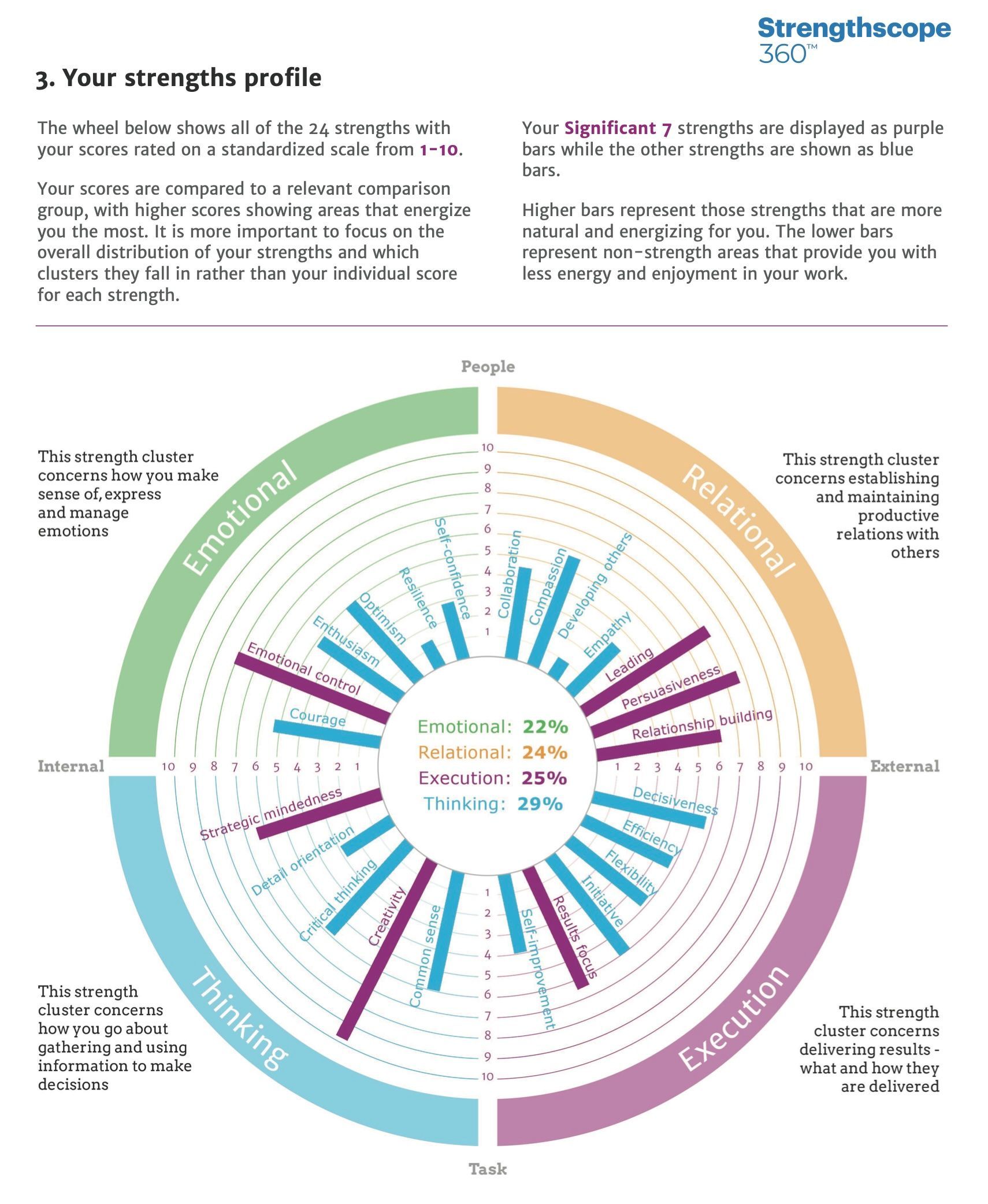
Model: Strengthscope is a strengths-based profiling tool. It identifies the strengths that energize people at work.
Focus: The focus is on potential, motivation, and performance. Rather than describing “personality as a whole,” Strengthscope highlights individual strengths and preferences in a professional context.
Application: Strengthscope can be used for leadership and team development, personal engagement, motivation, performance, and career development.

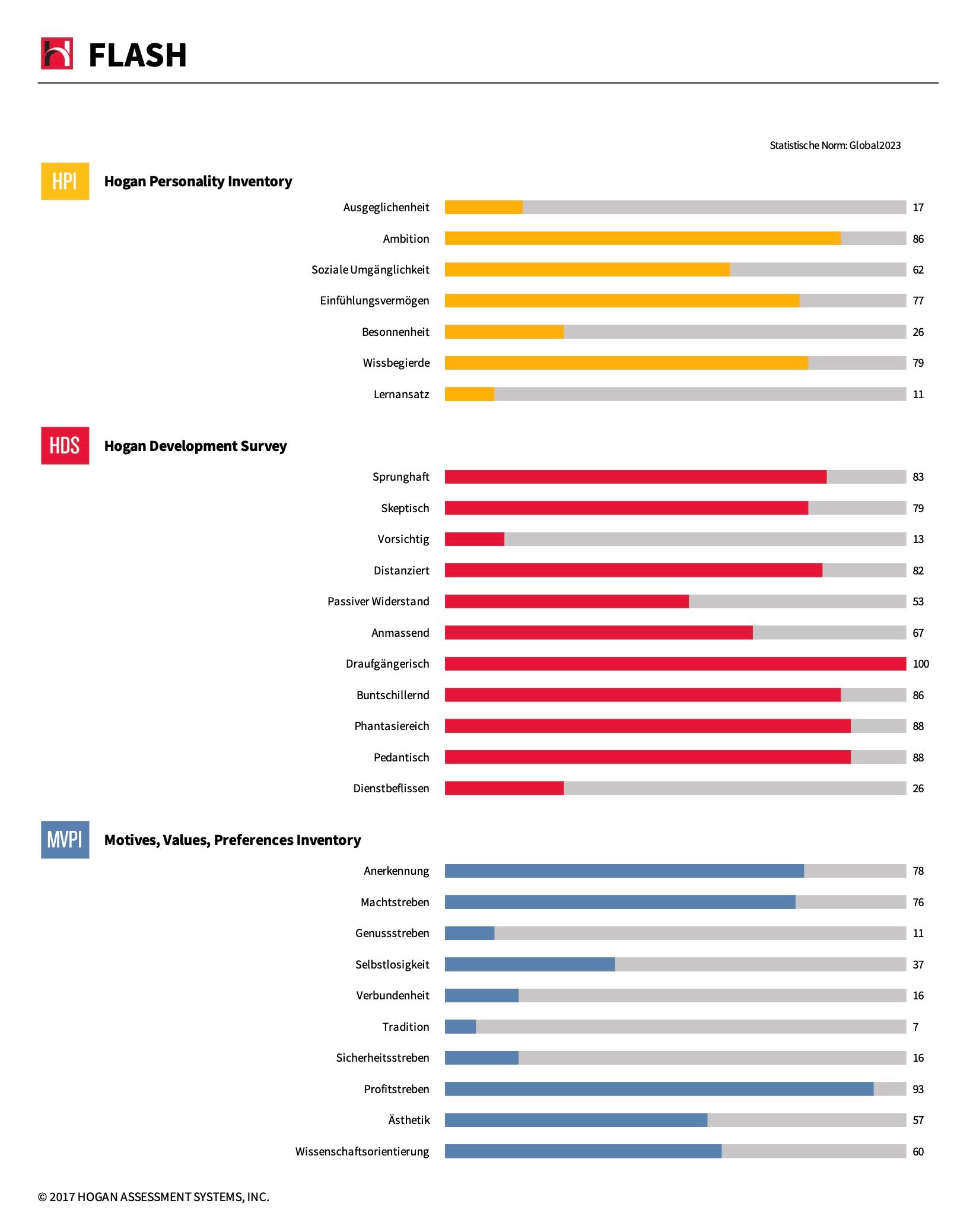
Model: Hogan is a leadership-related personality assessment model. It includes, among others, the Hogan Personality Inventory (HPI), which focuses on the “bright side” of personality, the Hogan Development Survey (HDS), which identifies potential risks under pressure, and the MVPI, which explores motives and values.
Focus: The focus is on workplace and leadership behavior, leadership potential, performance risks, and fit with the organization and leadership role.
Application: Hogan is frequently used in recruitment and selection, leadership development, talent management, and career and succession planning.
Model: LINC is based on a model inspired by the Big Five and complements personality traits with personal motives and competencies.
Focus: The focus is on a holistic and non-judgmental view of personality. It looks at behavior, motivation, and abilities together.
Application: LINC can be used for leadership and team development, recruiting, team fit, personal development, and career development.
General Process for Personality Assessment
1)
Online Questionnaire
Access to the tool via an individual link, completion time: approx. 30 minutes
2) Personalized Report
Individual evaluation with graphics, recommendations, and insights into development potential
3) Debrief Session
Explanation of the tool, discussion of the results, and clarification of any questions
4) Coaching / Workshops
Optional individual coaching or team workshops to translate the insights into practical development steps
coaching Skills for leaders
For Individuals or Groups
Modern leadership does not mean always having the right answer immediately. Often, the greatest impact is created when leaders ask the right questions, enable development, and strengthen their employees’ ownership, clarity, and ability to find solutions.
In the Coach Training for Leaders, I provide practical coaching methods that can be directly integrated into everyday leadership. The focus is on a meaningful combination of clear conversation structures, effective questioning and reflection techniques, and systemic approaches.
Leaders learn how to apply coaching skills intentionally and effectively — while staying fully within their leadership role
Training Focus:
The training supports leaders in developing a coaching mindset, clearly understanding the roles and boundaries between leadership and coaching, and leading conversations in a structured, solution-focused, and committed way.
Participants learn how to clarify topics precisely, develop target images, broaden perspectives, and agree on concrete next steps.
The approach is particularly valuable in everyday leadership situations — such as delegation, development and feedback conversations, conflict resolution, change processes, or performance-related topics. Leaders develop the ability to decide situationally when coaching is useful and when advice, decision-making, or clear guidance is required.
By the end of the training, leaders will be able to integrate coaching sequences effectively into their day-to-day leadership practice: they listen more actively, ask better questions, encourage ownership, work more confidently with resistance and emotions, and create clear agreements for sustainable development.
The Coach Training can be individually designed and tailored to your specific needs, target groups, and leadership contexts. Upon request, I am developing a suitable training concept and providing a customized proposal aligned with your goals, framework conditions, and desired development areas.
individual trainings
Development becomes truly effective when it is rooted in real challenges, objectives, potential of individuals teams, and organizations.
Regardless of experience level — whether for individual or teams — every development journey is unique and requires a format that fits the specific goals, context and needs of the people involved.
Focus: Leadership Capabilities
Effective leadership develops when personal strengths, core competencies and specific areas for growth are intentionally connected. In my tailored leadership trainings, I support leaders, teams, and organizations in creating this connection — practical, reflective, and closely aligned with the real challenges of everyday management.
The starting point is a clear understanding of your current situation: Which strengths, skills and resources define you or your team? Which leadership topics matter most right now? Based on this, we identify key capability areas, clarify development priorities, and define individual or collective goals.
This creates a training concept that does not rely on standard solutions, but focuses on what is truly relevant for you, your team, or your organization.
Possible focus areas may cover prioritization and time management, adaptability, motivating and developing employees, expectation management and delegation, trust-building and relationship management, conflict resolution, emotional intelligence, stress management, and effective team collaboration.
Depending on your context, the training may combine different formats and methods: reflection on your leadership role, practical exercises, case work, peer exchange, feedback, personality profiles, or concrete transfer tasks for day-to-day practice. It is not only about providing knowledge, but to create directly applicable impulses for leadership, collaboration, and personal development.
The goal is to strengthen managers in leading with greater awareness, clarity and impact — with a stronger sense of orientation in their role, more confidence in demanding situations, and greater effectiveness when leading people, teams, change and performance.
Further training focus areas:
- Agile Working
- Change Management
Focus: Communication
The Gallup State of the Global Workplace 2026 shows that global employee engagement declined in 2025 for the second year in a row, reaching its lowest point since 2020. Only around 20% of employees worldwide are considered engaged. For organizations, this sends a clear message: motivation, commitment, and performance do not happen by chance — they are strongly shaped by leadership, relationships, and communication.
Unclear expectations, ineffective feedback, misunderstandings, unspoken tensions, and vague commitments cost time, energy, trust, and productivity. This makes conscious communication one of the most important leadership capabilities for improving collaboration and keeping people focused on what truly matters.
Effective communication training supports leaders and teams in conducting conversations with greater clarity, awareness, and constructive intent. At its core is communication at eye level: appreciative, transparent, solution-focused, and free from premature judgment.
It is not about being right or being particularly assertive, but about expressing needs, expectations, perceptions, and feedback clearly and respectfully.
Through active and empathic listening, precise questions, and action-oriented language, communication creates clarity and strengthen connection. Conflicts are not only seen as disruptions, but also as valuable opportunities to make differences visible, better understand what matters, and develop sustainable solutions.
A tailored communication training strengthens perception, self-reflection, and confidence in conversations. Leaders and teams learn to give and receive feedback more effectively, formulate clear agreements, address misunderstandings early, and remain constructive even in challenging situations.
GET IN CONTACT